



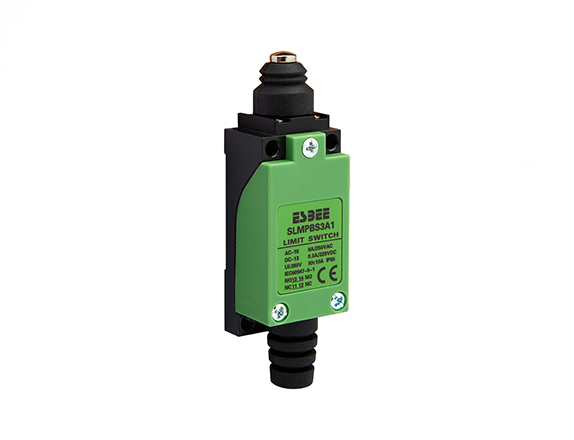


Hybrid Metal-Plastic Limit Switches Combining Structural Performance with Cost Efficiency
Variants: SLMPBS3D1 · SLMPBS3F5 · SLMPBS3A1 · SLMPBS3B3 · SLMPBS3B2 · SLMPBS3M3 · SLMPBS3M4
The SLMPB Series Metal and Plastic Limit Switches are a hybrid-construction industrial position detection switch range that combines a metal actuator head and operating mechanism with a plastic housing body — delivering an intermediate specification that provides greater actuator robustness than all-plastic switches in applications with moderate impact loading, while retaining the corrosion resistance and cost efficiency of plastic housing construction for the switch body and enclosure. Available in seven actuator variants, the SLMPB series fills the specification gap between the SLPB plastic series and the SLMB full-metal series for applications that require more actuator durability than plastic can provide, but do not need the full structural specification of the all-metal housing.
The engineering rationale for the metal-plastic hybrid construction is straightforward: in most limit switch applications, the actuator head and lever assembly experience the greatest mechanical loading — direct contact with cams, dogs, and machine elements — while the switch body and housing experience primarily environmental exposure rather than mechanical impact. By manufacturing the actuator assembly from metal and the housing from high-impact plastic, the SLMPB series concentrates the metal construction's strength where it is most needed and retains the plastic housing where its lighter weight, corrosion immunity, and cost advantages are most relevant.
The SLMPB actuator variants include the A1 standard roller lever for general cam-operated sensing, F5 adjustable roller lever for variable cam height accommodation, B2 and B3 fork roller variants for rod and shaft sensing in different approach configurations, D1 push plunger for direct depression actuation, and M3 and M4 multi-directional roller head variants for sensing from multiple approach directions without reorienting the switch — a capability that reduces the number of switch positions required in multi-direction sensing applications.
The multi-directional M3 and M4 variants deserve specific attention as they represent a functional capability distinct from single-direction actuators: the roller head can be engaged by cam approaches from multiple directions, enabling a single switch to serve as a position sensor for a machine element that may approach from different directions depending on the operational mode. This flexibility reduces the switch count and wiring complexity of multi-mode machine designs.
The contact block architecture follows the IEC 60947-5-1 standard with snap-action switching for clean, definitive contact transitions, and the hybrid housing provides an IP rating suitable for the typical industrial operating environment of the switch's intended applications — general manufacturing, light to medium industrial machinery, and automation applications where actuator durability is more important than full metal housing robustness.
Key Features
For more than 50+ years, Esbee Electrotech LLP has been a global manufacturer for electromechanical switches, phase indicators, push buttons, safety stations, LED Solutions, PCBAs for industries like footer Industrial, FMCD, FMCG, Elevators and Automobile.
© 2025 Esbee Electrotech LLP. All rights reserved.


 Datasheet
 Product Catalogue